
Why Eelgrass Meadows Struggle to Fit Into Carbon Credit Markets
Eelgrass (Zostera marina) meadows are the most widespread seagrass ecosystems on Earth, supporting coastal biodiversity, stabilising sediments, and delivering a range of ecosystem services. However, new research, by Hilary Kennedy, Carmen Leica-Dueñas, Catherine E. Lovelock and Dorte Krause-Jensen, shows that their capacity to accumulate and store organic carbon is substantially lower than often assumed, raising important challenges for their inclusion in carbon crediting frameworks.
Eelgrass Accumulates and Stores Low amounts of Organic Carbon
While seagrass ecosystems are known for trapping and storing organic carbon in their sediments, not all species perform equally. The study compared eelgrass with Posidonia oceanica, a slow‑growing Mediterranean species famous for its massive carbon reserves. The results were striking:
Eelgrass sediment carbon stocks were about 40% lower than those of Posidonia oceanica.
Its carbon accumulation rate was 50% lower.
In fact, eelgrass captured only around one‑fifth of the carbon assumed in the Intergovernmental Panel for Climate Change (IPCC) standard seagrass Tier 1 default emission factor.
These findings challenge the assumption that eelgrass meadows can reliably deliver the high carbon sequestration rates needed for carbon market projects.
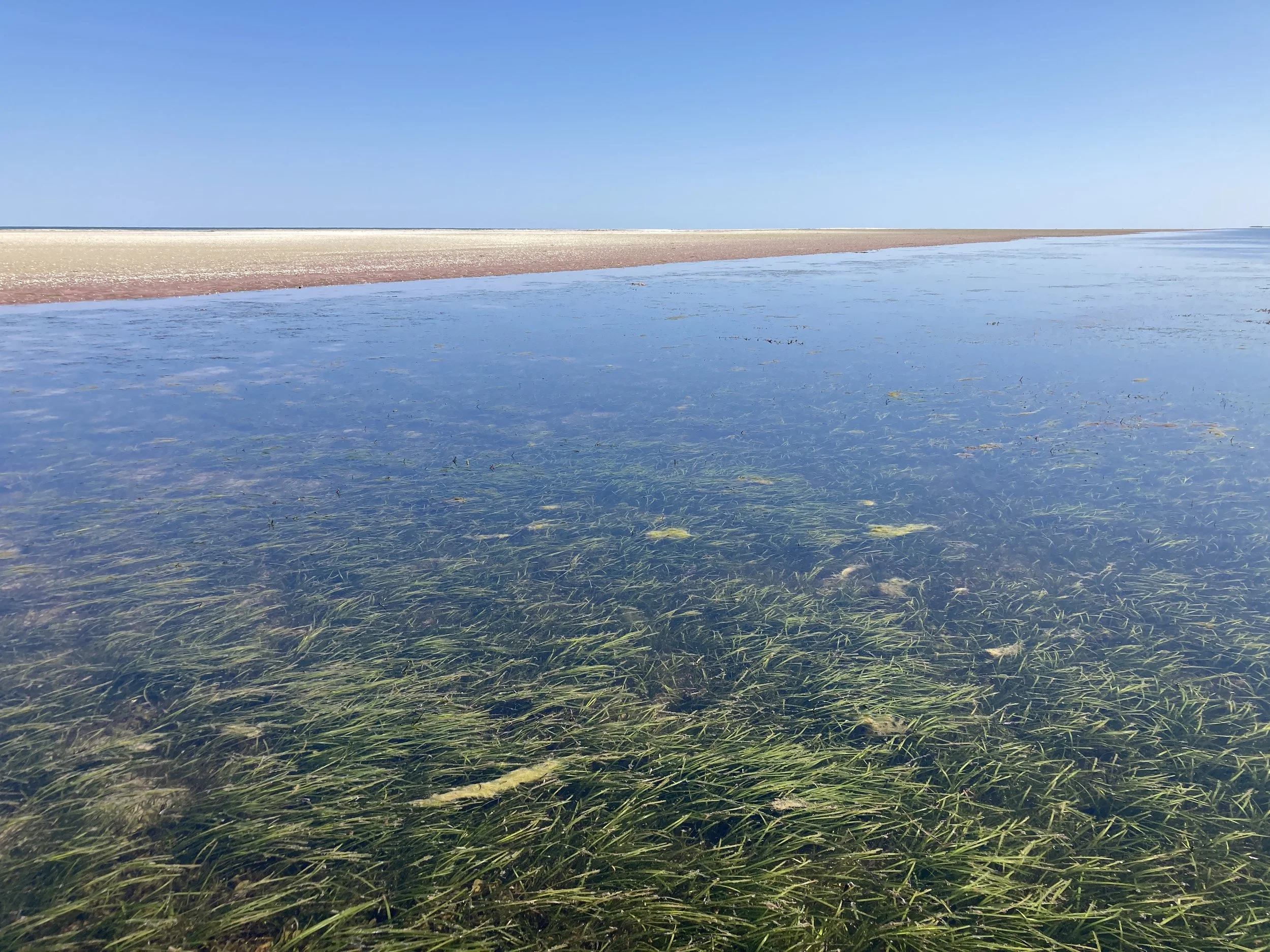
Eelgrass. By Dorte Krause-Jensen
Why the Numbers Fall Short
Several factors help explain eelgrass’s modest carbon performance compared to long-lived, persistent species such as Posidonia oceanica:
Dynamic and patchy growth: Eelgrass meadows shift over space and time, making carbon storage inconsistent.
Eelgrass traits: As a colonizing species, eelgrass doesn’t build the long‑lasting organic carbon stores seen in more persistent seagrasses.
Carbon export: Much of the carbon produced in eelgrass meadows may be transported elsewhere rather than stored locally.
Lacking clear sedimentary gain: In 60% of the sites studied, carbon levels in eelgrass sediments were no different from nearby bare areas.
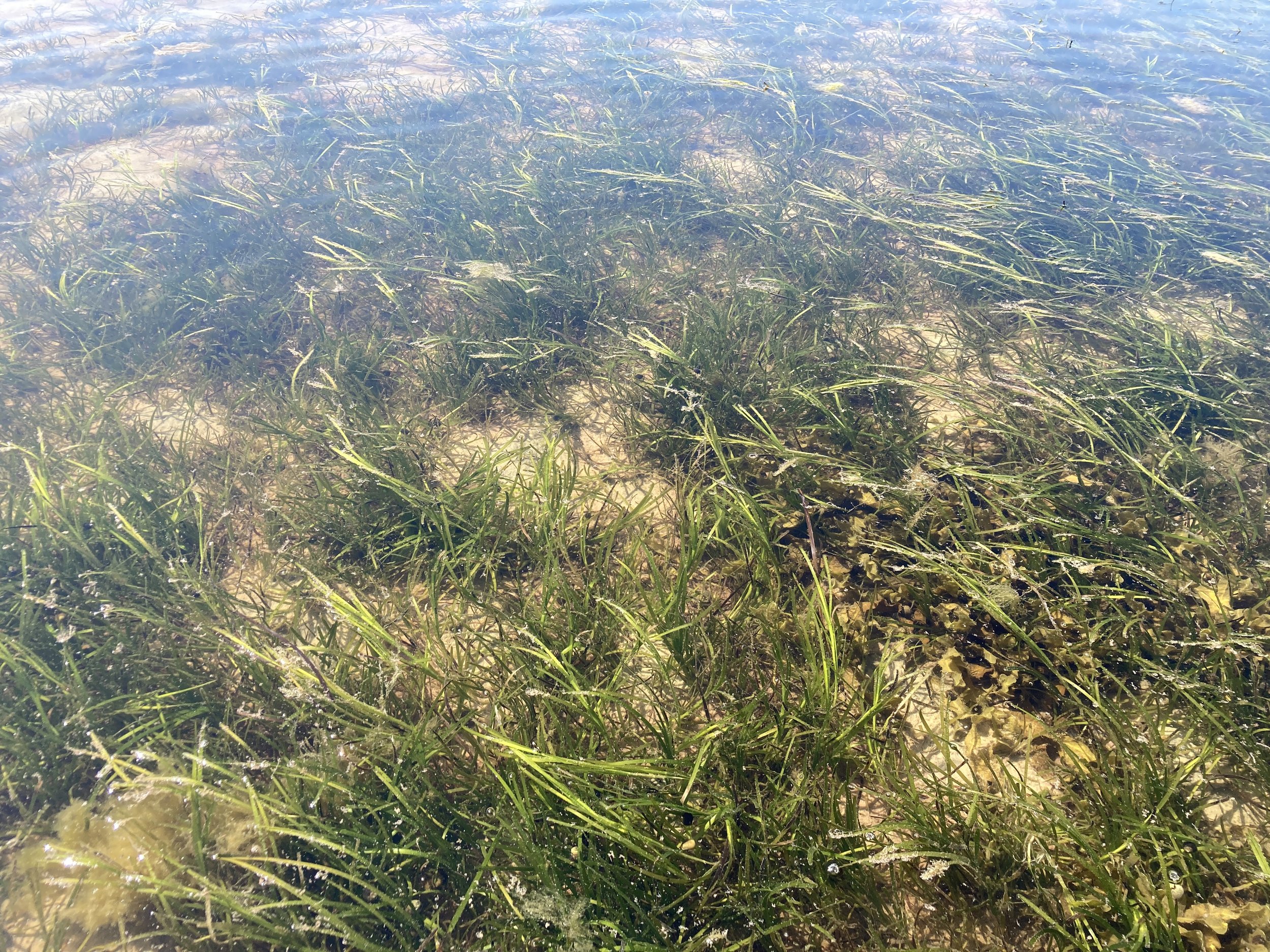
Eelgrass meadow. By Dorte Krause-Jensen
A Broader View of Value
The takeaway isn’t that eelgrass meadows lack importance — far from it. They, like most seagrass meadows, provide a wealth of ecosystem services:
Habitat for fish, shellfish, and marine wildlife
Coastal protection
Water quality improvements
Support for biodiversity hotspots
These benefits are substantial, even if carbon storage alone doesn’t justify large-scale carbon crediting projects.
Rethinking Restoration Goals
Eelgrass restoration is important for all the benefits it provides, but the study highlights that not all seagrass meadows are equal. Recognising differences between seagrass species traits such as between opportunistic and persistent seagrass species is essential for ensuring that carbon accounting and carbon markets remain scientifically credible.
Read the full article here.