
C‑BLUES at Ocean Sciences Meeting 2026: A Week of Knowledge‑Sharing, Collaboration, and Blue Carbon Leadership
Fresh from Glasgow and the Ocean Sciences Meeting 2026, we are excited to share the strong presence and contributions of C‑BLUES throughout this year’s conference. Across scientific sessions, oral talks, and hands‑on workshops, the project played an active role in advancing global discussions on blue carbon science, monitoring, and policy.
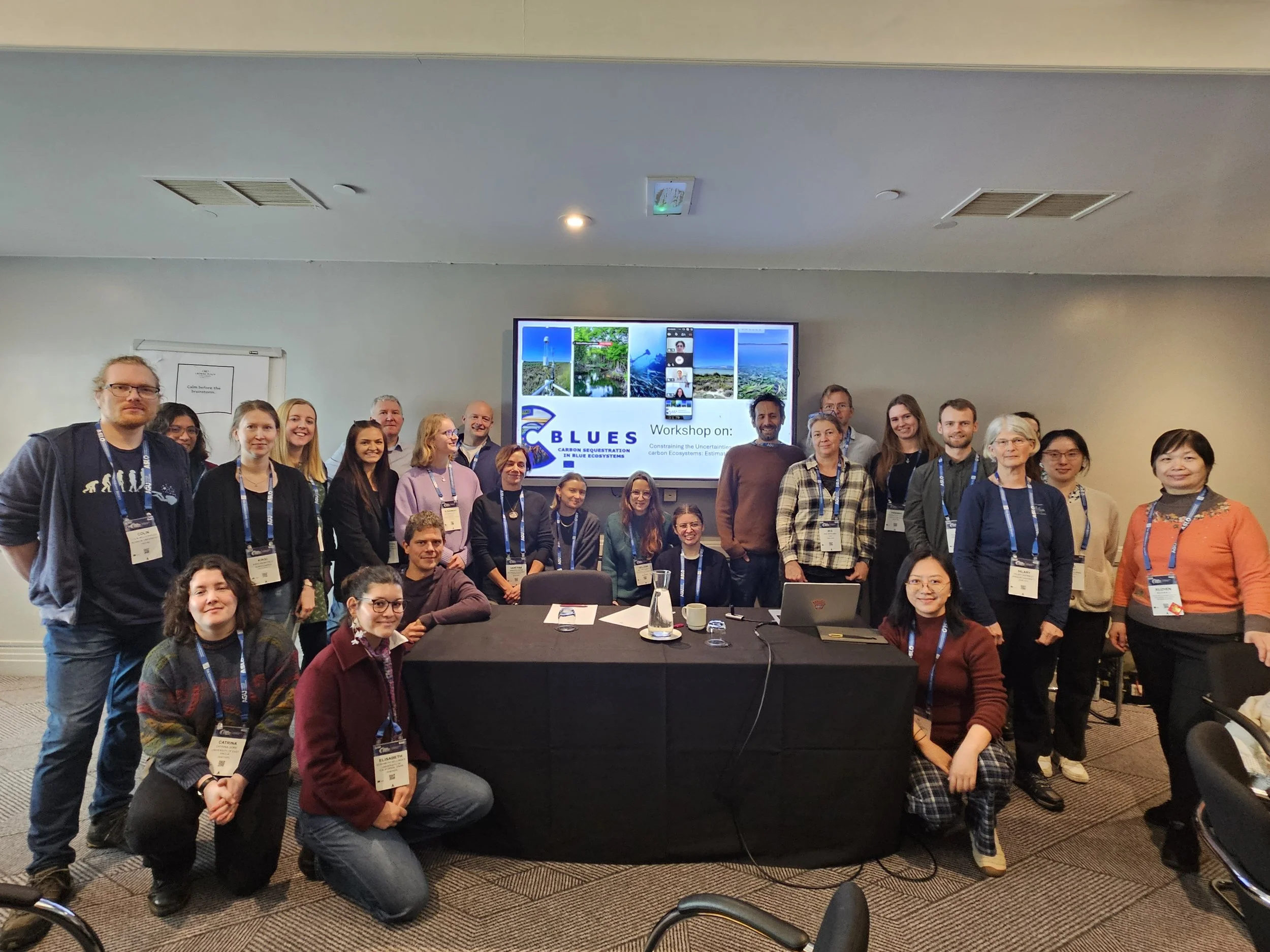
C-BLUES members and attendees of the C-BLUES workshop at OSM 2026. By Chris Lindemann.
Leading a Session on Mapping and Monitoring GHG Fluxes
Several C‑BLUES members (Ariane Arias Ortiz, Dimitris Poursanidis, Iris Hendriks, Julia Mañez, Chris Lindemann, Steeve Comeau) convened and moderated the scientific session “Mapping, Monitoring, and Modeling Greenhouse Gas (GHG) Fluxes in Coastal Habitats to Advance Blue Carbon Science.”
The session brought together researchers from around the world to explore new tools, data streams, and modelling approaches for understanding greenhouse gas dynamics in coastal ecosystems.
See more here.
Scientific Contributions from the C‑BLUES Team
Greenhouse Gas Dynamics in the Balearic Islands
Peru Agueda Aramburu presented a talk on GHG dynamics in coastal ecosystems of the Balearic Islands, sharing new insights into climate‑relevant processes in Mediterranean blue carbon habitats.
See more here.
Remote Sensing & In Situ Methods for Blue Carbon
Chris Lindemann highlighted emerging approaches in his presentation, “Remote sensing and in situ methods for assessing blue carbon ecosystems,” showcasing how multi‑scale observations compare across different blue carbon ecosystem.
See more here.
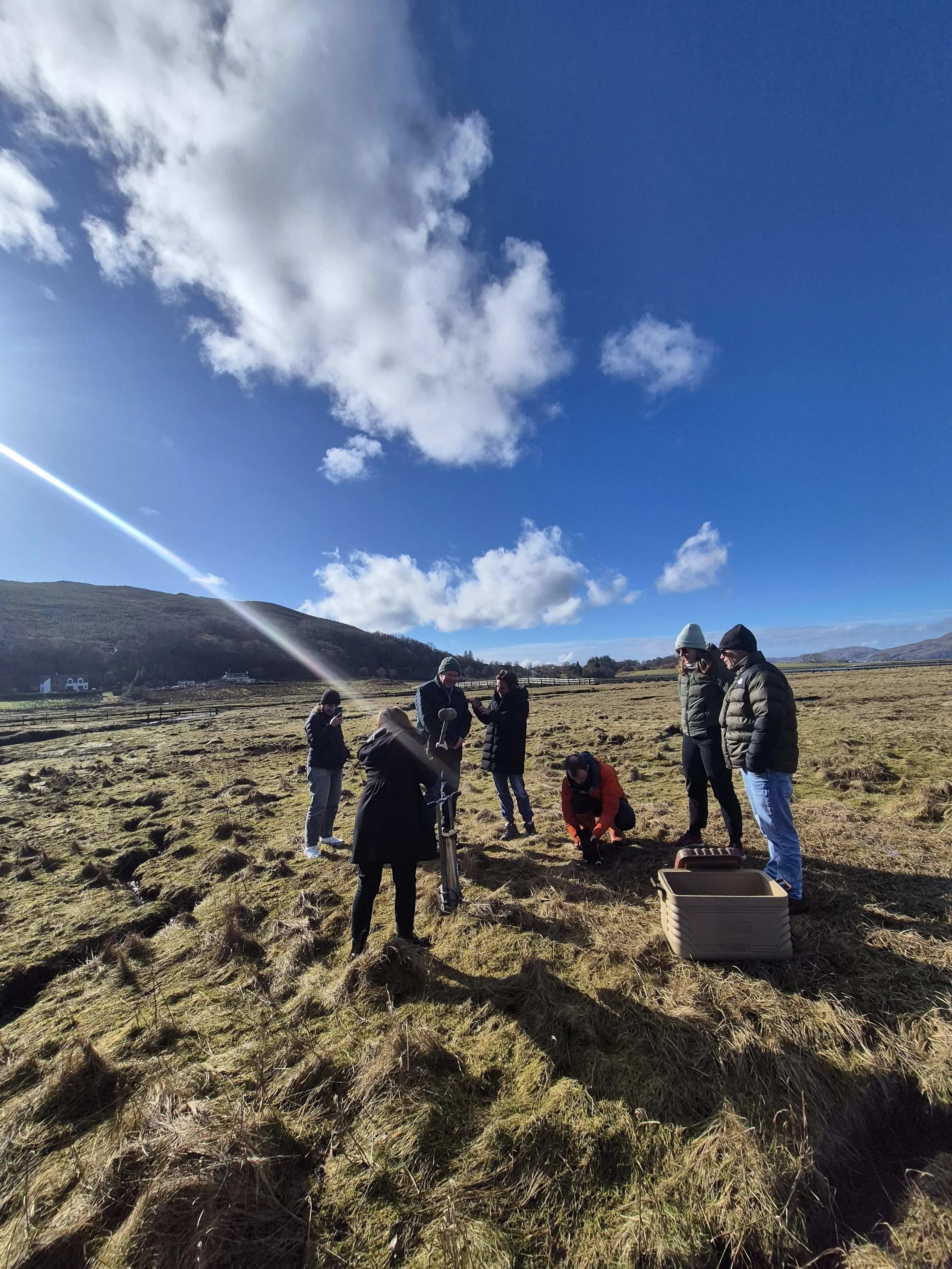
Fieldtrip activity testing soil coring methods after the C-BLUES workshop at OSM26. By Iris Hendriks
C‑BLUES Poster Contribution: Multistressor Impacts on Coastal Vegetation
C‑BLUES also contributed to the multistressor research theme through the session:
“Under Pressure: Multistressor Impacts on Coastal Vegetation and Greenhouse Gas Dynamics”
ASLO Poster Session CB24D — Tuesday, 24 February
Led by Theodor Kindeberg, Steeve Comeau, Iris Hendriks and Sam Dupont. This session explored how combined environmental stressors shape coastal vegetation functioning and greenhouse gas exchanges — a topic central to understanding ecosystem resilience under accelerating climate pressures.
See more here.
Furthermore, C-BLUES members led the session: M52A- The Science of Current and Emerging Blue Carbon Ecosystems
This session, led by William Austin, Hilary Kennedy and Xiuzhen Li, explored the effects of local disturbances, human activities, and/or climate change to coastal OC cycling and GHG fluxes;
See more here.
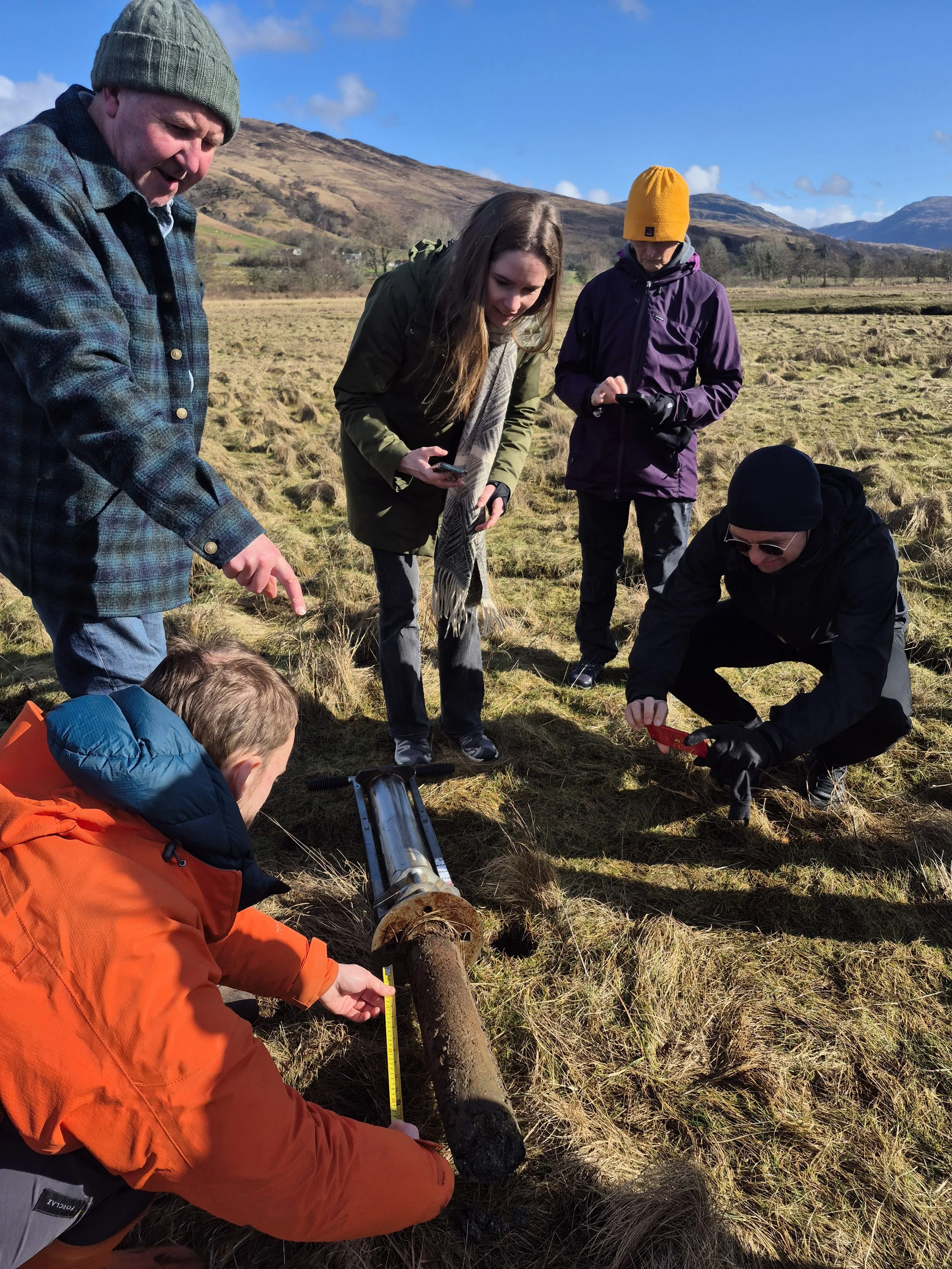
Investigating the sediment sample from the soil coring in the field. By Iris Hendriks.
A C‑BLUES Workshop on Reducing Uncertainty in Blue Carbon Science
C‑BLUES also hosted an interactive workshop:
Workshop: Constraining Uncertainties in Assessing Blue Carbon Ecosystems: Estimating Emission Factors (M2.2)
Led by Cale Miller (Utrecht Uni), the workshop focused on the practical challenges of estimating emission factors for blue carbon ecosystems—an essential component for improving national inventories, reporting frameworks, and climate policies.
Following the workshop, C‑BLUES members and fellow blue carbon researchers visited the Loch Laich saltmarsh on the West Coast of Scotland for a fieldtrip led by Alex Houston and Bill Austin. The group demonstrated and discussed soil coring methods used to investigate carbon storage in saltmarsh ecosystems. The visit also included a stop at the Oban Whisky Distillery, offering a chance to reflect on the day’s discussions and a valuable week at OSM26.
Workshop: From Science to Policy: Sedimentary Blue Carbon
As part of the workshop, Dimitris Poursanidis delivered a presentation titled “Sedimentary Blue Carbon: From Science to Policy,” exploring how scientific evidence can be translated into decision‑making tools.
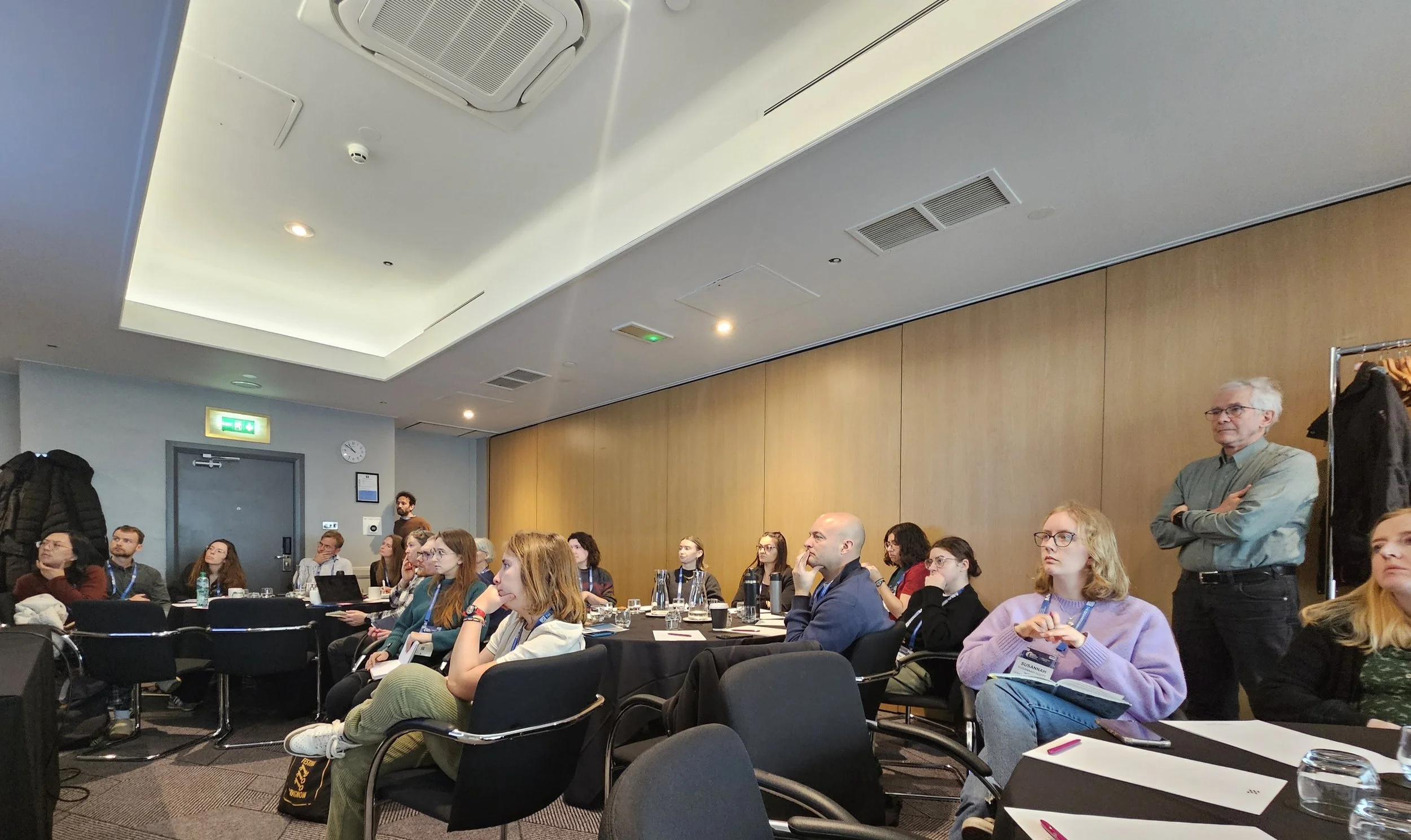
C-BLUES workshop at OSM26. By Chris Lindemann
A Strong Showing for C‑BLUES
This year’s OSM demonstrated the growing relevance of blue carbon science and the central role C‑BLUES plays in shaping the field. From session leadership and scientific talks to capacity‑building workshops, the project team helped highlight the importance of robust greenhouse gas measurements, improved monitoring approaches, and stronger science‑policy pathways.
C‑BLUES returns from Glasgow energized by new collaborations, thoughtful discussions, and the shared commitment to advancing blue carbon knowledge globally.