
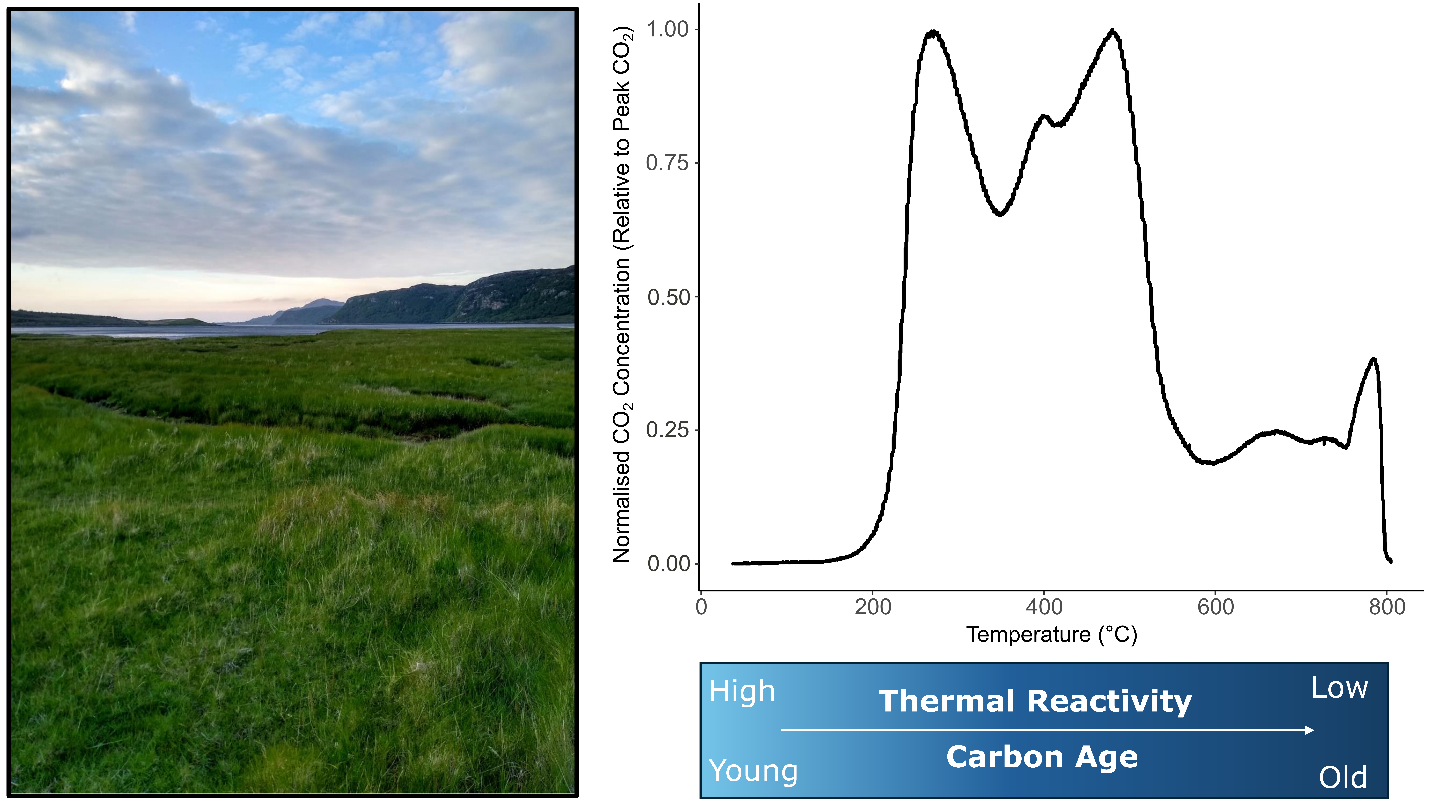
A groundbreaking study by Houston, Garnett, and Austin has unveiled new insights into carbon turnover in saltmarsh soils. Using ramped oxidation and radiocarbon analysis, the researchers examined the thermal reactivity and bioavailability of organic carbon in Scottish saltmarsh soils.
🔍 Key Findings:
Old vs. Young Carbon: Thermally recalcitrant (hard to decompose) carbon pools are dominated by older carbon, while younger carbon sources are more thermally labile.
Carbon Vulnerability: Thermally labile carbon is more susceptible to decomposition under oxygen-rich conditions, potentially leading to increased CO₂ emissions from these pools if saltmarshes are drained and degraded for land use purposes.
Management Implications: Rewetting saltmarshes to reduce oxygen exposure could help preserve vulnerable carbon stores and support climate goals.
Carbon Credit Relevance: The study supports including thermally labile allochthonous (externally derived) carbon in additionality assessments for carbon crediting and national greenhouse gas inventories.
This research deepens our understanding of how saltmarshes function as carbon stores and highlights the importance of protecting and restoring these ecosystems in mitigating climate change.
Houston, A., Garnett, M. H., and Austin, W. E. N.: Old carbon, new insights: thermal reactivity and bioavailability of saltmarsh soils, Biogeosciences, 22, 4851–4864, https://doi.org/10.5194/bg-22-4851-2025, 2025.